



Link all'articolo originale: http://www.swamij.com/mantra-brain-words.htm
Mantra, the Brain, and Words
by Swami Jnaneshvara Bharati
SwamiJ.com
Effects of Mantra: For thousands of years, yogis have been teaching the value of mantra in stabilizing and clearing the mind, leading one to deeper spiritual awakening. Modern neuroscience is also beginning to discover the relationship between mental functioning and the way words are used. The following graphic is from the book The Secret Life of the Brain, by Richard Restak, M.D. (©2001, Richard M. Restak and David Gruben Productions, Inc.).
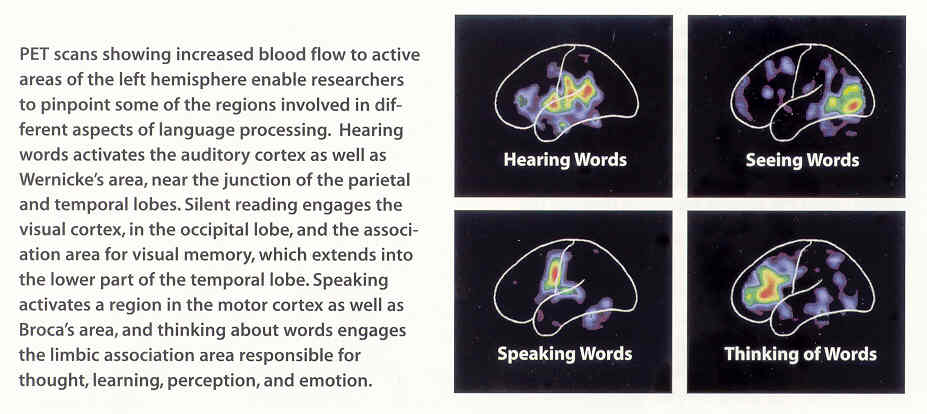
Ways of using words or Mantra: Notice the explanation of increased blood flow (indicating increased activity) to the various parts of the brain, depending on whether one is hearing, seeing, speaking, or thinking of words. Regarding thinking about words, the text points out that "thinking about words engages the limbic association area responsible for thought, learning, perception, and emotion."
Cultivating higher functioning: This higher functioning (buddhi) is intentionally cultivated by yogis through the practices of mantra, meditation, and contemplation. Not only do the yogis use mantra (i.e., words), but often recommend focusing the attention on this frontal part of the brain as well, placing attention in the ajna chakra, the center accessed through the space between the eyebrows.
"Remembering" the Mantra: In Yoga Meditation science, different means of using mantra are prescribed. The silent, inner remembering way of using mantra use considered a higher, more effective form than hearing, reading, or speaking the mantra (See the article Japa and Ajapa-japa). Many benefits come from the proper use of mantra, including dealing with ways of thinking, ability to learn, ways of perceiving, and positive use of emotions (the four points mentioned by Dr. Restak in the text above). Collectively, these benefits set the stage for the deeper practices of meditation, contemplation, and prayer (See the article Converging Four Practices).
Mantra is universal: In reflecting on the relationship between mantra and brain physiology, it is most important to remember that mantra is not a practice solely used by the Eastern traditions. The use of mantra, word, compact prayer, or affirmation is recommended by virtually all religions and meditative traditions, although they might describe or use them in different ways.
Varieties of Mantras: There are many mantras, of which a few are described in this website. These are Soham, OM, and Maranatha. Each of these are beneficial in the ways described above.
Related links on Use of Mantra: The following links are from the article entitled How to Use a Mantra, and are specifically related to the nature of the mantra as a spoken or remembered word (use Back key to return):
Related articles: The following articles also deal with mantra:
